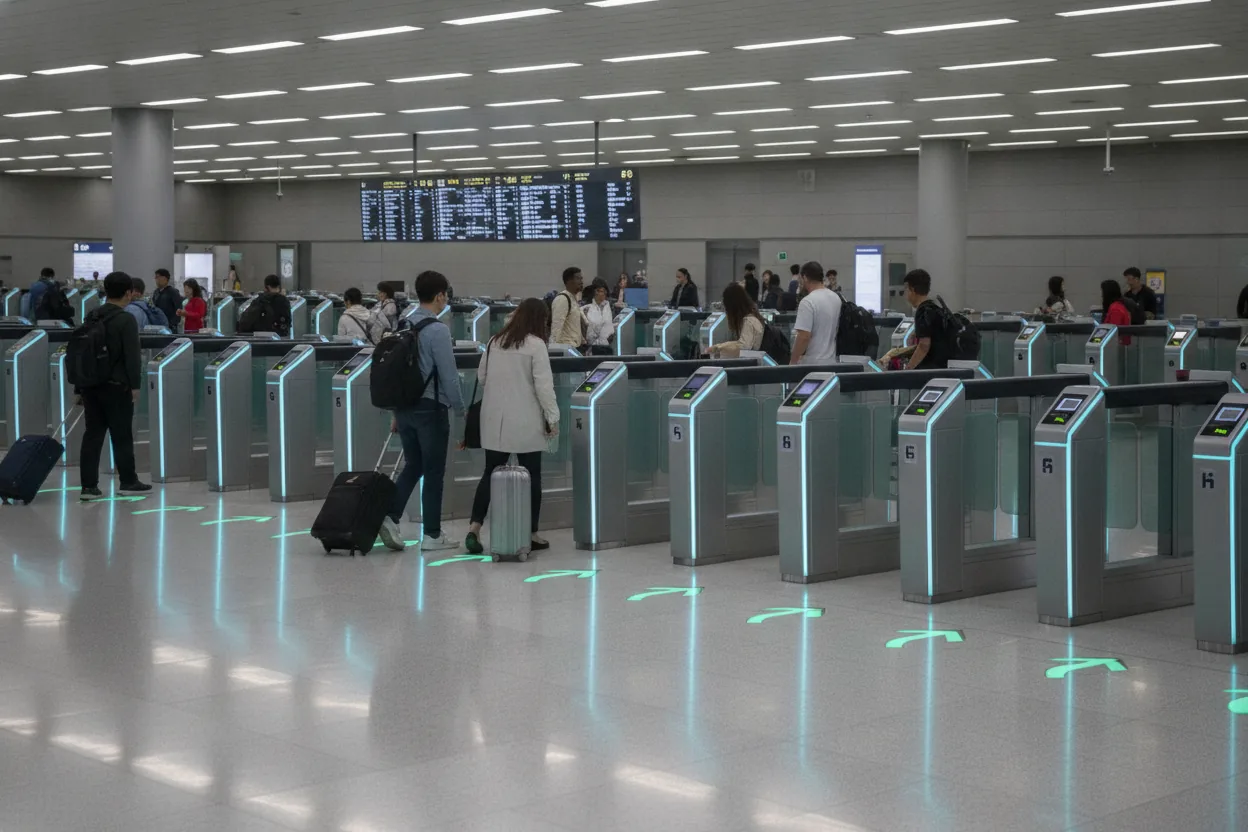
Most coverage of Korea's record 4.76 million first quarter arrivals credits a single BTS performance at Gwanghwamun Square in March. That explanation skips the part that actually moved the number: Korea quietly expanded multiple entry visa eligibility to 12 countries and widened automated border control from 18 to 42, cutting entry friction for millions of travelers before any stage was built. A concert generates headlines for a weekend. A border policy change compounds for a quarter. So which one explains the 23 percent jump, and what happens to that growth once the easy policy wins run out?
The Visa Math Explains More Than The Concert Does
Q1 2026 Arrivals by Source Market
Q1 2026 Arrivals by Source Market
| Country | Arrivals | YoY Growth |
|---|---|---|
| China | 1.45 million | +29.0% |
| Japan | 940,000+ | +20.2% |
| Taiwan | Not confirmed | Above average* |
*Taiwan figure described as outpacing most major markets but exact pace unverified against ministry release.
Source: Korea Ministry of Culture, Sports and Tourism
Start with the numbers the culture ministry actually published. Chinese visitors led the pack at 1.45 million, up 29 percent year on year. Japanese arrivals topped 940,000, up 20.2 percent. Taiwan grew faster than almost every other major source market, though the exact pace and visitor count are worth double checking against the ministry's own release. Three countries, three different growth rates. One explanation underneath all of them: access got easier.
In March 2026, the Ministry of Culture, Sports and Tourism worked with the Ministry of Justice to expand multiple entry visa eligibility to 11 Southeast Asian countries, including Vietnam and the Philippines. At the same time, the list of countries eligible for automated border control jumped from 18 to 42. That second number matters more than it sounds like it should. Automated border control is the unglamorous machinery of tourism, the difference between a 40 minute immigration queue at Incheon and a 90 second gate scan. Multiply that friction reduction across millions of travelers and you get behavioral change at scale, the kind that shows up in quarterly data without a single viral moment behind it.
Compare this to how Japan has handled its own tourism surge since 2023, largely riding a weak yen and visa free access for a wide swath of nationalities. Korea is running a more targeted version of the same play. Instead of broad blanket access, the government expanded multiple entry privileges specifically toward markets it wanted to lock in for repeat visits: China, Vietnam, and the Philippines, while widening the automated gate list to cut friction for a much larger pool of nationalities. That's infrastructure policy wearing a tourism costume.
Airlines flying the Seoul to Taipei and Seoul to Manila routes gain predictable volume. Duty free retailers in Myeongdong and Jeju get back a Chinese group tour segment that had been soft since 2017. The ministry gets a narrative it can present at the next budget cycle. The people who gain least are the ones expecting K pop alone to keep driving these numbers, because the tailwind here is bureaucratic, not cultural, and bureaucratic tailwinds outlast a comeback tour.
China's Return Signals A Market Correction, Not A Culture Win
How Korea's Policy Change Cut Entry Friction
How Korea's Policy Change Cut Entry Friction
Step 1: March 2026 Policy Expansion
Multiple entry visa eligibility expanded to 11 Southeast Asian countries plus China, including Vietnam and the Philippines
Step 2: Automated Border Gates Widened
Eligible countries jump from 18 to 42, cutting queue time from about 40 minutes to about 90 seconds
Step 3: Lower Friction Across Millions of Travelers
Behavioral change compounds at scale over the full quarter, unlike a one weekend concert spike
Result: 4.76 Million Q1 Arrivals
A 23 percent year on year jump, driven by infrastructure policy rather than a single cultural event
Source: Ministry of Culture, Sports and Tourism; Ministry of Justice
The visa and border changes explain why entry got easier across the board, but they don't explain why China's growth rate, at 29 percent, outpaced Japan's. For that you have to look at where China's numbers started from, not just where they ended up. Sit with why Chinese arrivals cratered in the first place before celebrating their comeback. Korean tourism from China hit a wall in 2017 after the THAAD missile defense dispute, when Beijing informally restricted group tour operators from selling Korea packages. That restriction eased gradually rather than all at once, unwinding market by market and city by city over the years since. The 1.45 million Chinese visitors in Q1 2026 don't mean Korean culture suddenly got more appealing to Chinese travelers in early 2026. They mean the regulatory floor China built in 2017 has mostly eroded, and travel patterns are reverting toward a pre dispute baseline.
That distinction changes how you should read the 29 percent figure. It sounds impressive until you remember the base it's growing from was artificially suppressed for most of a decade. Growth off a depressed base isn't the same signal as growth off a healthy one. Retailers staking inventory decisions on Chinese tourist volume need to ask whether this is a ceiling returning to its old shape or a genuinely new high. Based on the recovery pattern so far, the honest answer is that Korea is still closing a gap rather than breaking new ground with this particular market.
Japan's 20.2 percent growth tells a cleaner story because there was no equivalent political freeze behind it. Japanese travelers have been coming back steadily since Korea's post pandemic reopening, driven by proximity, a favorable exchange rate for the yen against the won, and a travel culture that treats a long weekend in Seoul the way Americans treat a weekend in a neighboring state. Less noise to decode there. It's close to what it looks like.
Taiwan is the market that deserves the most attention and gets the least of it in most coverage of this data. A jump of that size, off a comparatively modest base, isn't a rounding effect, and Taiwan has no THAAD style political overhang distorting its baseline. That growth looks organic, likely tied to expanded flight capacity between Taipei and Korean regional airports beyond Incheon, plus a younger Taiwanese travel demographic that treats Korean content, beauty products, and food culture as a lifestyle import rather than a novelty. If there's a market worth watching through the rest of 2026, it's this one, precisely because nobody's talking about it as much as they're talking about China or the BTS headline.
Overseas Marketing Spend Faces Its Real Test Later This Year
Chinese Arrivals: THAAD Collapse and Recovery Path
Chinese Arrivals: THAAD Collapse and Recovery Path
Illustrative trend showing suppression after 2017 and reversion toward baseline by Q1 2026
High
2016 (Pre THAAD)
Low
2017 to 2018 (THAAD Dispute)
Rising
2019 to 2023 (Gradual Easing)
Near Baseline
2024 to 2025
1.45M
Q1 2026
The 29 percent jump reflects recovery from a suppressed 2017 base, not a sudden surge in cultural appeal.
Source: Article narrative based on post 2017 THAAD dispute trend; illustrative trajectory
China's rebound and Taiwan's organic growth both point to the same driver from the first section: policy and structural conditions moved the numbers, not a marketing push. So what happens when Korea's own plan shifts emphasis toward marketing? The culture ministry has stated its plan clearly: aggressive overseas marketing to sustain this growth trajectory. That phrase covers a lot of ground, from ministry officials attending international travel trade events to co branded campaigns with airlines and Korean entertainment companies like HYBE. The open question is whether marketing spend can do anything close to what visa liberalization already did in a single quarter.
Marketing changes perception. Visa and border policy changes behavior directly, no persuasion step required. A Vietnamese traveler who previously needed a complicated single entry visa process now has a materially easier path if they fall under the expanded multiple entry framework. No advertisement was required to produce that shift. The policy did the work the marketing budget usually gets credit for.
That creates an uncomfortable asymmetry for the second half of 2026. The low hanging fruit of border friction reduction has mostly been picked. Korea can't repeat the automated gate expansion from 18 to 42 countries for the same incremental effect. Future quarterly growth will depend more and more on marketing campaigns doing heavier lifting against a much higher year ago comparison base, since Q1 2026 itself is now the number Q1 2027 gets measured against. Comping a 23 percent increase is a very different challenge than producing the original 23 percent increase.
There's also a capacity question nobody in the ministry press release addresses directly. Incheon Airport, Gimpo, and regional hubs like Jeju and Busan absorbed this volume increase reasonably well in Q1, partly because winter and early spring aren't peak domestic travel season for Koreans competing for the same infrastructure. Summer 2026 will be a different test. If foreign arrival growth holds anywhere near this pace into July and August, hotel pricing in central Seoul neighborhoods like Myeongdong and Hongdae will move first, and airport congestion will move second. Tourists benefit from easier entry. Domestic travelers and Seoul residents absorb the downstream pricing and congestion effects, and that tradeoff rarely makes it into a ministry announcement built around a record breaking headline number.
Korea has made a structural bet that loosening entry access produces compounding returns: more visitors, more spending, more reason for airlines to add capacity, more reason for retailers to invest in multilingual service infrastructure. That bet looks sound based on one quarter of data. It's the visa and border changes, not the concert, that will decide whether the 23 percent jump holds once the comparison base gets harder and marketing has to do the work policy already did once. The number worth watching in the next ministry release isn't the applause line about a concert in Gwanghwamun Square. It's whether Taiwan's growth rate holds up without a THAAD style base effect to inflate it, because that's the cleanest read available on whether Korea's tourism gains are structural or borrowed from a low base.
This article is for informational and educational purposes only and does not constitute financial, investment, or legal advice. Views expressed are analytical observations and should not be relied upon for personal financial decisions. Consult a qualified financial advisor before making investment decisions.