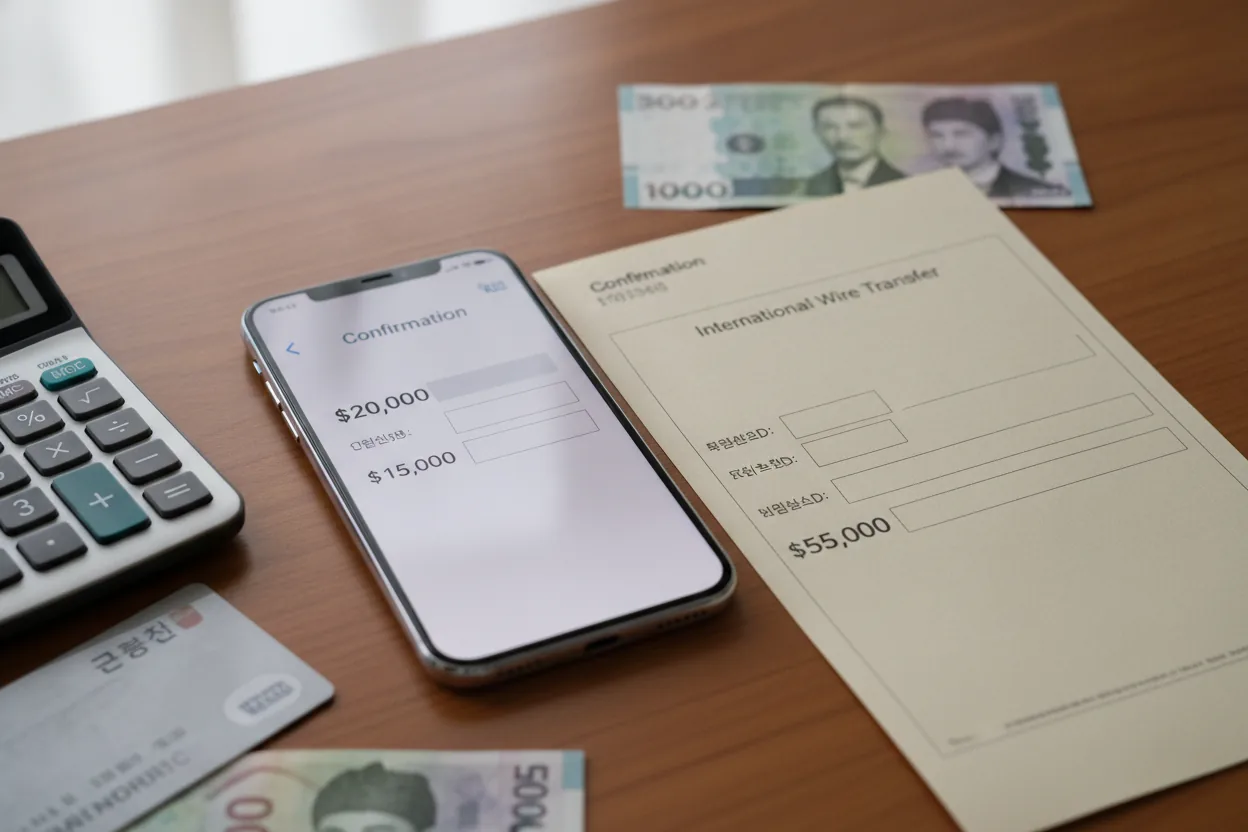
Hosting a Large Foreign Resident Population Drives Korea's Remittance Market
Two people send the exact same amount out of Korea today. One uses a bank wire, the other uses Wise. They land on completely different totals, and the gap is sitting right there on the confirmation screen the whole time, if you know where to look. A traditional bank wire can end up costing far more once you add the flat fee to the hidden exchange rate markup, while Wise moving the same money through the same corridor comes in well below that. So which one actually deserves your transfer? Depends on more than which app you already have installed.
- KRW 10,000 to 50,000: the flat wire fee most Korean banks charge per transaction.
- 1.5% to 2.5%: the exchange rate spread banks quietly tack onto the mid-market rate. This is usually the bigger cost, even though it's the one nobody points out to you.
- $10 to $25: SWIFT intermediary bank fees that can show up on the receiving end with zero warning.
- KakaoBank caps how much you can send per transaction and per month, though the exact numbers shift, so confirm directly with the bank before you plan around them.
- A traditional international wire from a Korean bank generally takes several business days to settle.
Stack these together and you get why two identical transfer amounts arrive as two very different totals depending on the rail: a flat fee up to KRW 50,000, a hidden spread of 1.5% to 2.5%, and sometimes another $10 to $25 in intermediary charges, all piled on top of each other. If you send money regularly, check both charges, the fee and the spread, not just whatever number the confirmation screen decides to show you. Next step: line these up against each other and see what they actually cost in practice.
Comparing Actual Costs Across Toss, KakaoBank, Wire, and Wise
Run the same corridor through each method and the gap gets hard to ignore. The traditional bank wire is still the expensive default, landing well above the fintech options once you combine the flat fee, the exchange markup, and whatever SWIFT decides to skim off the top. Toss, KakaoBank, and dedicated remittance platforms like Wise all undercut that number by a wide margin.
- A traditional bank wire from Korea bakes in the KRW 10,000 to 50,000 fee plus that extra rate markup on top, so the sticker price is never the real price.
- 2 to 5 days: how long that wire takes to settle. Fintech rails, by contrast, deliver near-instantly.
- Wise consistently comes out as the cheapest option for most individual remittance corridors leaving Korea.
- KakaoBank undercuts the banks but still runs a bit pricier than Wise, and it covers Japan, China, the USA, the Philippines, and Vietnam.
- Send between 500,000 and 2,000,000 KRW through Wise instead of a bank wire, and the savings per transfer add up to a real number, not pocket change.
A student sending money home every month for a six-month exchange semester watches that per-transfer savings compound into enough to cover a real chunk of travel or living costs. That's the actual reason fintech apps have eaten so much of this market from the banks, not marketing, just math that repeats every month. Now that the cost gap is settled, the real question is which method fits your specific transfer, because the cheapest option on paper isn't automatically the right call for every situation.
Choosing the Right Method for Your Transfer Size and Timeline
Pick your platform based on transfer size, urgency, and destination, not brand loyalty. Big formal payments like tuition or property deals still need a bank's regulatory machinery behind them, while smaller recurring remittances do better on apps built for speed and thin spreads. Toss and KakaoBank live entirely inside Korea's mobile banking world, which matters a lot if you don't read Korean and would otherwise be stuck filling out a full SWIFT wire form at a branch counter.
- KRW 1,000,000+: above this, bank wires start holding their own again, since a flat fee matters less as the transfer amount grows.
- KakaoBank: works well if you're already banking in the app and just need the occasional transfer under its per-transaction cap.
- Wise: the default pick for most individual senders. Low cost, delivery usually inside a day.
- Xe: as little as $4 on transfers under $1,000, with wire transfer opening up once you cross $3,000.
- Western Union sits in an odd spot: rate markups up to 1.49% depending on payment method and destination, which makes it a stronger fit for cash pickup than for straight bank deposits.
Before you send anything, compare the all-in cost, fee plus exchange spread, not just the fee that gets advertised on the homepage. The exchange rate markup is usually the bigger number on any traditional wire, even though it's the one banks bury. That KRW 10,000 to 50,000 fee next to a 1.5% to 2.5% spread is precisely what separates an overpriced bank wire from a fast, cheap fintech transfer. Match the platform to your transfer size and your deadline instead of defaulting to whatever app happens to already be on your phone, and you'll stop overpaying by tens of dollars every single time you send money.