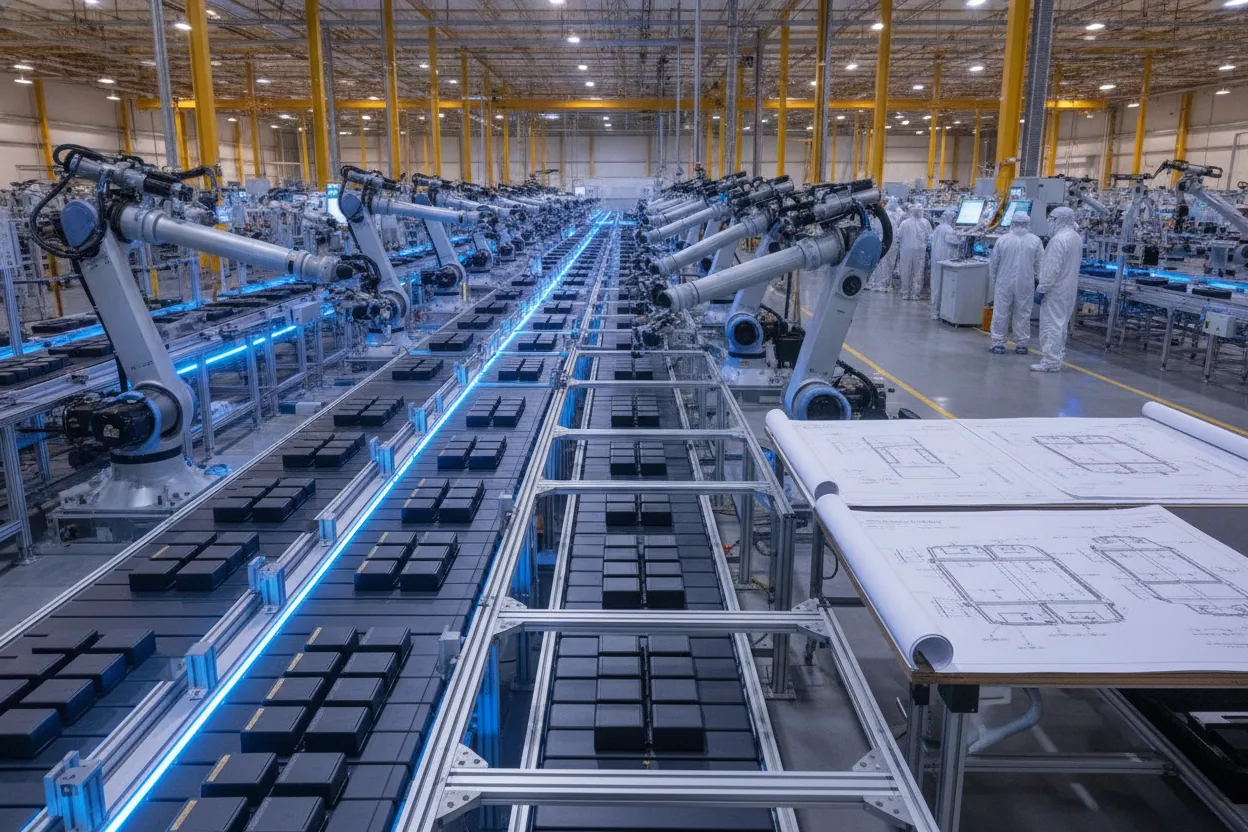
Five and a half billion dollars. That's what LG Energy Solution is now pouring into Arizona plants built to make the one battery chemistry it spent two decades treating as second rate. Korea's battery giants engineered their entire export identity around high nickel cells for range hungry premium automakers, not around the cheap, low density LFP chemistry that China quietly turned into the industry default. So why are LG and Samsung SDI suddenly chasing the very technology they bet against, five years after CATL and BYD already won that race? This isn't a story about falling behind through incompetence. It's what happens when a strategy built for one market collides head on with a buyer base that stopped caring about kilometers and started caring about cost per kilowatt hour.
China Turned a Cheaper Battery Chemistry Into a Structural Advantage
Korea's LFP Reversal: From Betting Against to Betting Billions
Step 1: Korea bets on high nickel chemistry
A decade ago, Korean firms prioritize range over cost, ignoring LFP.
Step 2: China wins the LFP race
CATL and BYD dominate LFP capacity; Tesla adopts LFP in Shanghai in 2021.
Step 3: Korea races to catch up on materials
L&F and EcoPro BM push Gen 4.5 high density LFP, pilot lines targeted this quarter.
Step 4: Korea builds US LFP plants
LG's 5.5 billion dollar Arizona plants open 2026, positioning as the non Chinese supplier.
Source: Source: Article content on LG Energy Solution and Samsung SDI LFP strategy
Lithium iron phosphate batteries have always been the practical cousin in the battery family. Lower energy density means less range per pack, sure, but LFP also skips cobalt and nickel entirely, runs more thermally stable, and costs meaningfully less to manufacture than nickel based packs. Korean firms looked at those tradeoffs a decade ago and bet the future was range anxiety, not sticker price. CATL and BYD made the opposite bet. By the time Tesla started putting LFP packs into standard range Model 3 and Model Y units built in Shanghai, the chemistry had already become the default choice for any EV maker trying to hit a price point under 35,000 dollars. That miscalculation cost Korea's battery makers roughly five years of head start that Chinese producers now hold in LFP.
- CATL and BYD control the overwhelming majority of global LFP cell production capacity.
- Tesla's Shanghai plant has built standard range vehicles on LFP packs since 2021
- Korean battery executives now describe LFP's rise as a resurgence rather than a niche trend
- L&F and EcoPro BM are racing to commercialize Gen 4.5 high density LFP materials, with pilot lines targeted for this quarter, a timeline that leaves almost no room for delay
The Gen 4.5 label matters because it signals where Korean suppliers think they can still compete. Not on cost, that ship sailed years ago. The play is pushing LFP's energy density higher through material science, closing part of the range gap while keeping the cost advantage intact. Whether that narrows the gap enough to matter to a General Motors or a Renault buying at scale is the question every battery contract negotiation in Seoul is quietly built around. It's also the same question driving where Korean firms choose to build their next plants.
LG and Samsung Are Building American LFP Plants for Political Reasons Too
Korean Battery Makers' Key LFP Moves and Partners
| Company | Key Move | Partner / Detail |
|---|---|---|
| LG Energy Solution | 5.5 billion dollar Arizona LFP and ESS plants, 2026 start | General Motors, Renault's Ampere |
| Samsung SDI | 4680 cylindrical cell talks plus LFP partnership work | Multiple automakers, General Motors (exited JV) |
| SK On | Facing competitive pressure, no matching scale yet | No announced US LFP capacity at scale |
| L&F / EcoPro BM | Gen 4.5 high density LFP materials, pilot lines this quarter | Material suppliers to Korean cell makers |
Source: Source: Article content on LG Energy Solution, Samsung SDI, and SK On
The Arizona plants aren't just a technology pivot. They're a geography bet. LG Energy Solution's 5.5 billion dollar LFP and energy storage system facilities in Arizona are scheduled to begin operations in 2026, and the timing lines up neatly with a US policy environment that has spent the last several years trying to build a battery supply chain that doesn't run through Chinese owned factories. Samsung SDI's talks with multiple automakers over 4680 type cylindrical cells, alongside its LFP partnership work with General Motors, tell a similar story. Korean firms are positioning themselves as the non Chinese option inside a market that increasingly wants one.
- LG Energy Solution's Arizona LFP and ESS plants represent a 5.5 billion dollar commitment with a 2026 start date
- General Motors is working with LG Energy Solution on LFP battery plants inside the United States, though it has exited its battery joint venture with Samsung SDI
- Renault Group's Ampere signed a multi year LFP supply deal with LG Energy Solution for lower cost EVs sold in Europe
- SK On faces the same competitive pressure without yet matching the scale of announced US LFP capacity
Here's the part that gets lost in the plant announcements. Building an LFP factory in Arizona isn't primarily about beating CATL on cost. It's about offering GM and other US automakers a battery supply chain that qualifies for domestic content rules and sits outside the geopolitical risk that comes with sourcing from Chinese owned cell makers. Korea isn't winning the LFP cost war, and it knows it. It's selling insurance against a different kind of risk, and that insurance business is proving worth billions in contracted volume even at a technology disadvantage. That disadvantage in the value segment, though, is only half the picture. It says nothing about where Korea still holds the upper hand.
Nickel Chemistry Still Pays Off in the Premium Segment
The Cost of Being Late: Korea's Five Year LFP Gap
~5 Years
Head start China's CATL and BYD hold in LFP production
$5.5B
LG's Arizona LFP and ESS plant investment
2021
Year Tesla Shanghai began building standard range EVs on LFP
2026
Scheduled start date for LG's Arizona LFP plants
Source: Source: Article content on Korea's LFP timeline versus China
None of this means Korea's original strategy was wrong, only that it was incomplete. High nickel batteries still win on energy density, and for premium vehicles where range and performance justify a higher price tag, LG Energy Solution, Samsung SDI and SK On remain the preferred suppliers over Chinese rivals in most Western markets. Samsung SDI's push into 4680 type cylindrical cells, the larger format Tesla popularized to cut cost per kilowatt hour while keeping nickel chemistry, is a direct attempt to defend that premium tier rather than abandon it.
- 4680 type cells promise lower manufacturing cost per kilowatt hour while retaining nickel based energy density
- Samsung SDI is reportedly in discussions with multiple automakers beyond its existing partners for 4680 supply contracts
- Premium EV segments in North America and Europe still lean toward nickel rich chemistries for range sensitive models
- POSCO's cathode material affiliates keep investing in nickel supply chains even as domestic rivals pivot toward LFP, betting the premium tier holds up
The battery market that's emerging looks less like a single technology race and more like two parallel markets running side by side. One is a value segment where LFP and Chinese manufacturing scale set the price, and Korea is trying to build a seat at that table through American factories and geopolitical positioning rather than Chinese style cost leadership. The other is a premium segment where nickel chemistry and formats like 4680 still command a margin, built on years of contracts with automakers who prioritize range over sticker price. The Arizona plants aren't Korea admitting defeat on the bet it made a decade ago. They're Korea refusing to let that bet be the only one on the table. Whether it can run both plays at once, without diluting the capital discipline that built its nickel business in the first place, will determine whether this LFP pivot reads in five years as a smart hedge or a costly distraction.
This article is for informational and educational purposes only and does not constitute financial, investment, or legal advice. Views expressed are analytical observations and should not be relied upon for personal financial decisions. Consult a qualified financial advisor before making investment decisions.